
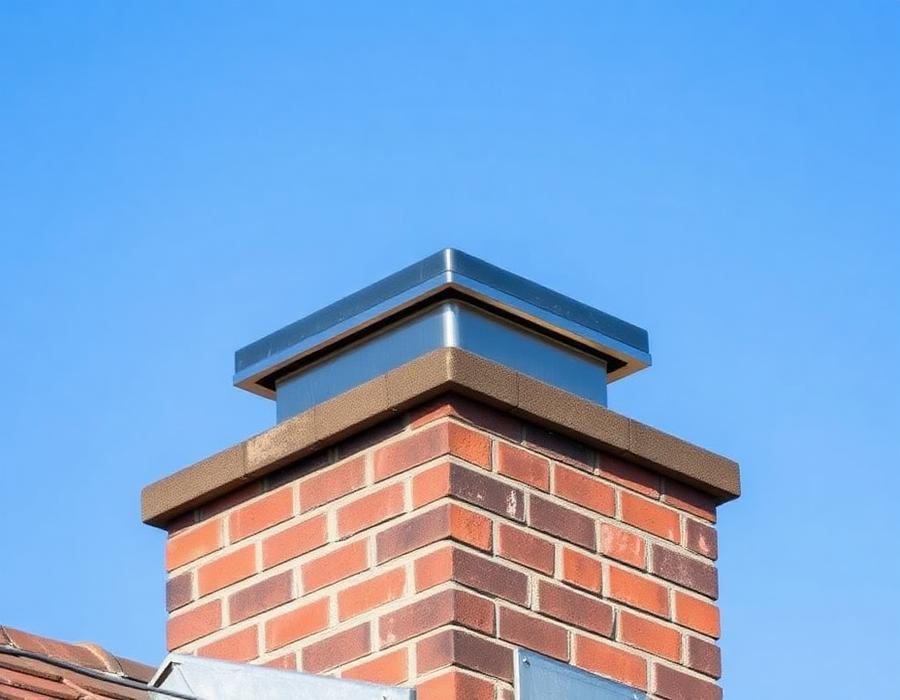
A chimney cap is the least expensive piece of chimney hardware and the one that prevents the most expensive problems. For a fraction of what water damage repair costs, a properly sized stainless cap keeps rain out of the flue, stops birds and raccoons from nesting inside, blocks burning embers from reaching your roof, and stabilizes draft in windy conditions.
Peters Chimney Masters installs custom-fitted stainless steel and copper caps, multi-flue caps for chimneys with more than one opening, and integrated cap-and-crown systems where the crown also needs attention.
What a chimney cap protects against
Rain is the primary threat. An uncapped flue is an open pipe pointed at the sky, and every storm delivers water directly to the smoke shelf, damper, and firebox. That water rusts steel components, saturates masonry from the inside, dissolves mortar joints between flue tiles, and creates the damp, acidic environment that destroys chimneys from within.
Animals are the second. Birds — chimney swifts in particular — nest inside warm flues, and raccoons routinely den in uncapped chimneys to raise young. Nesting material is highly combustible and can completely block a flue, pushing carbon monoxide back into the home. Removing an established nest and sanitizing the flue costs many times what a cap does.
Embers are the third, and in this region that matters. A spark arrestor screen contains burning fragments that would otherwise exit the flue and land on a roof or in dry landscaping. In fire-prone areas a screened cap is not a nice-to-have.
Finally, caps stabilize draft. Wind blowing across an open flue can invert airflow and push smoke back down into the room. A properly designed cap breaks that pressure and keeps the draft moving in the correct direction.
Choosing the right cap for your chimney
Stainless steel is the default recommendation. It resists corrosion from combustion acids and coastal moisture, holds up to sun exposure, and typically carries a lifetime warranty. Galvanized caps cost less and rust through in a handful of years, which makes them the more expensive choice over time. Copper is the premium option — beautiful on period and architectural homes, and it develops a patina rather than corroding.
Sizing has to be exact. A cap that is too small does not shed water past the crown; a cap that is too tall or too enclosed restricts draft. Screen mesh must be sized so it arrests sparks without clogging with creosote. For chimneys with two or more flues, a single custom multi-flue cap covering the entire crown outperforms individual caps and protects the crown surface at the same time.
We measure on site, never from a catalog guess, and we install with stainless fasteners so nothing rusts into place or works loose in wind.
Installation, maintenance, and pairing with crown work
Installation is straightforward on most chimneys and completed in a single short visit. We verify the crown condition first — if the crown is cracked, installing a cap alone addresses only half the water path, and we will show you the crown photos and quote both so you can decide.
Caps need occasional attention. Screens accumulate creosote and can restrict draft over a season of heavy burning; we clean the screen as part of every sweep. Fasteners get checked, and any lid deformation from a fallen branch or storm debris gets corrected.
If your existing cap blew off, that is worth investigating rather than simply replacing. Caps generally leave in wind because they were friction-fit rather than fastened, or because the crown they were mounted to has deteriorated.
Fast local installation
We install caps throughout your local area and the surrounding communities we serve, usually within a day or two of your call and often same-day when we are already in your area.
Because we are on rooftops constantly, we can typically tell you over the phone what type of cap your chimney style calls for and give you a realistic price range before we arrive.
Every cap installation includes a visual inspection of the crown, flue top, and flashing at no additional charge — it takes us five extra minutes and it catches problems while they are still small.
Warning signs to watch for
You can see sky from the firebox
If daylight comes straight down the flue, the chimney is uncapped and taking on water.
Scratching or chirping sounds
Animals are living in the flue and the nesting material is a serious fire hazard.
Water dripping into the firebox
Rain entering the flue directly is the fastest way to destroy a damper and smoke shelf.
Downdrafts and smoke smell
Wind inverting the flue is often fixed by a correctly designed cap.
Get your free chimney cap installation estimate today
Free written estimates, same-day service windows, and licensed technicians seven days a week. Call now and speak with someone who actually works on chimneys.
Call (866) 752-4313