
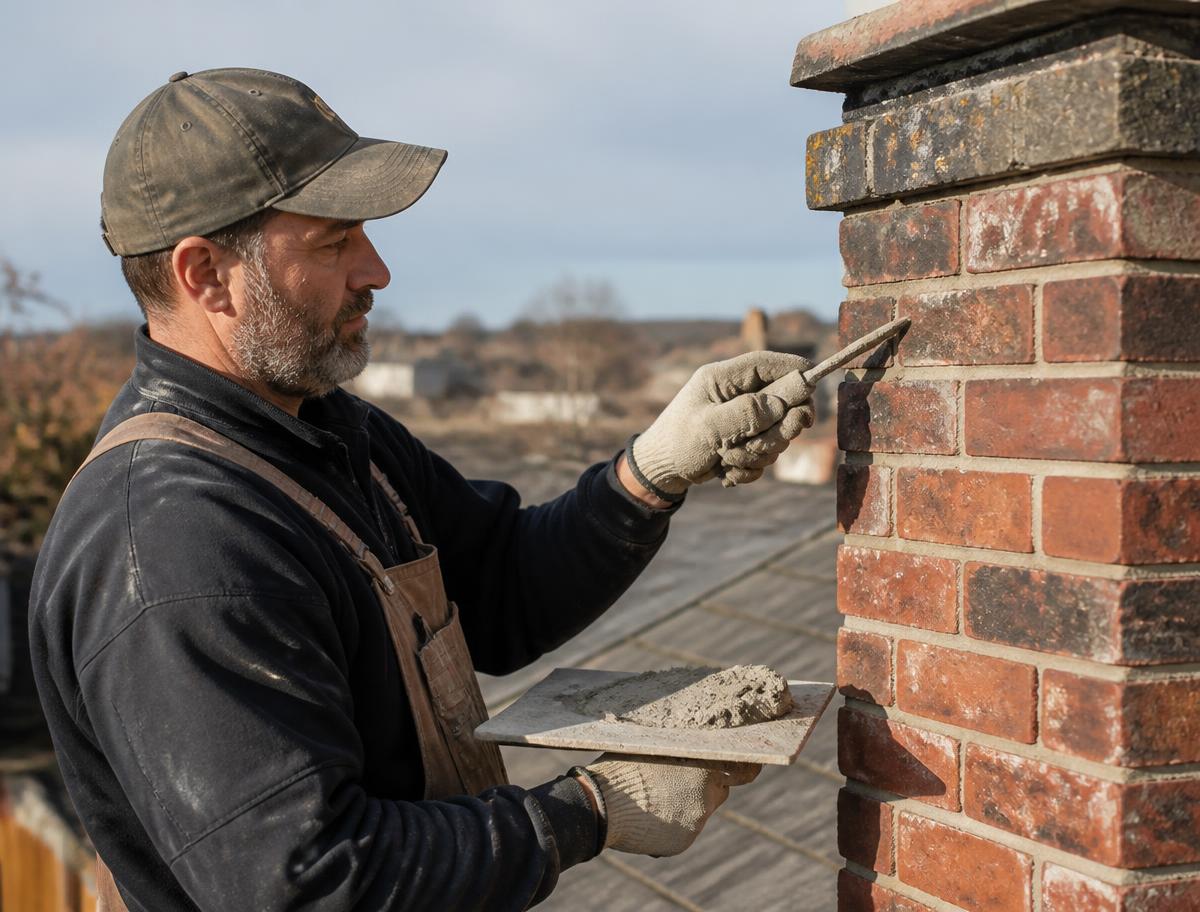
Masonry looks permanent, but a chimney is a stack of individual units held together by mortar that is deliberately softer than the brick around it. That softness is what lets a chimney absorb thermal movement and settling without cracking the units — and it is also why mortar is always the first thing to go. Peters Chimney Masters restores deteriorated masonry with mixes matched to your chimney's age and materials, so the repair strengthens the structure instead of quietly damaging it.
Our masonry work covers tuckpointing, individual brick replacement, smoke chamber parging, firebox rebuilding, and structural repair on chimneys that have shifted or cracked.
Tuckpointing done the right way
Tuckpointing means removing failed mortar to a proper depth — generally at least twice the joint width — and repacking the joint in layers with fresh mortar that is then tooled to match the original profile. Done correctly, it restores both weather resistance and load transfer between units, and it is invisible when finished.
Done incorrectly, it does damage. The most common shortcut is smearing new mortar over the face of a shallow joint without grinding out the failed material. That skim coat has nothing to bond to, holds water against the brick, and pops off within a few seasons — often taking brick faces with it.
The second common mistake is mix selection. Modern high-Portland mortars are harder and less permeable than the lime-rich mortars used before roughly 1930. Put a hard mortar next to a soft historic brick and the brick becomes the weak point: it spalls at the joint edges and absorbs the movement the mortar refuses to. On older homes we specify a softer, more permeable mix on purpose.
Brick replacement and matching
When a brick face has spalled, the unit cannot be repaired — the protective fired surface is gone and the porous interior is exposed. Coating or sealing it traps moisture inside and accelerates the failure. The unit has to be cut out and replaced.
Matching matters. Brick has changed in size, color, and texture over the last century, and a replacement that is close-but-not-right announces itself permanently from the street. We match on dimension first, then texture, then color range, and we blend replacements across an area rather than clustering them so the repair reads as original.
We also address the cause. A cluster of spalled brick on one face almost always means water is being delivered there by a failed crown, a missing cap, bad flashing, or a downspout discharging against the chimney. We fix the source in the same project.
Structural masonry and firebox work
Chimneys that lean, separate from the house, or show stair-step cracking through the mortar joints are telling you about movement — foundation settlement, seismic activity, or a footing that was undersized from the start. These conditions need evaluation before any cosmetic repair, because repointing a moving structure just recreates the crack.
Inside, the firebox takes the most direct thermal abuse in the entire system. Firebrick joints erode, panels crack, and the refractory mortar between them washes out. Gaps in a firebox let heat reach the surrounding masonry and, eventually, adjacent framing. We rebuild fireboxes with firebrick and refractory mortar rated for the temperatures they actually see.
The smoke chamber above the damper is frequently the most neglected part of a chimney. Corbelled brick left rough and unparged creates turbulence that hurts draft and gives creosote endless surface area to collect on. Parging it smooth improves performance and safety at the same time.
Craft-level masonry across the region
We perform masonry repair throughout your local area and the surrounding communities we serve, including on period homes where the goal is a repair nobody can find afterward.
The local climate creates a specific pattern of masonry wear: long, hot, dry stretches that shrink and craze mortar, followed by concentrated winter rain that saturates every opening at once. Add seismic movement and the result is chimneys that need attention on a shorter cycle than in milder regions.
Every masonry estimate is free and written, and every job ends with the roof and grounds swept clean. Our workmanship is guaranteed in writing.
Warning signs to watch for
Receding or missing mortar
Joints set back more than a quarter inch are letting water into the chimney core.
Spalled or flaking brick faces
Popped brick faces mean saturation and freeze or heat cycling; the units need replacement.
Stair-step cracking
Diagonal cracks following the joints indicate structural movement, not surface wear.
A visible lean or gap
Any separation between chimney and house needs immediate evaluation.
Get your free masonry repair estimate today
Free written estimates, same-day service windows, and licensed technicians seven days a week. Call now and speak with someone who actually works on chimneys.
Call (866) 752-4313