
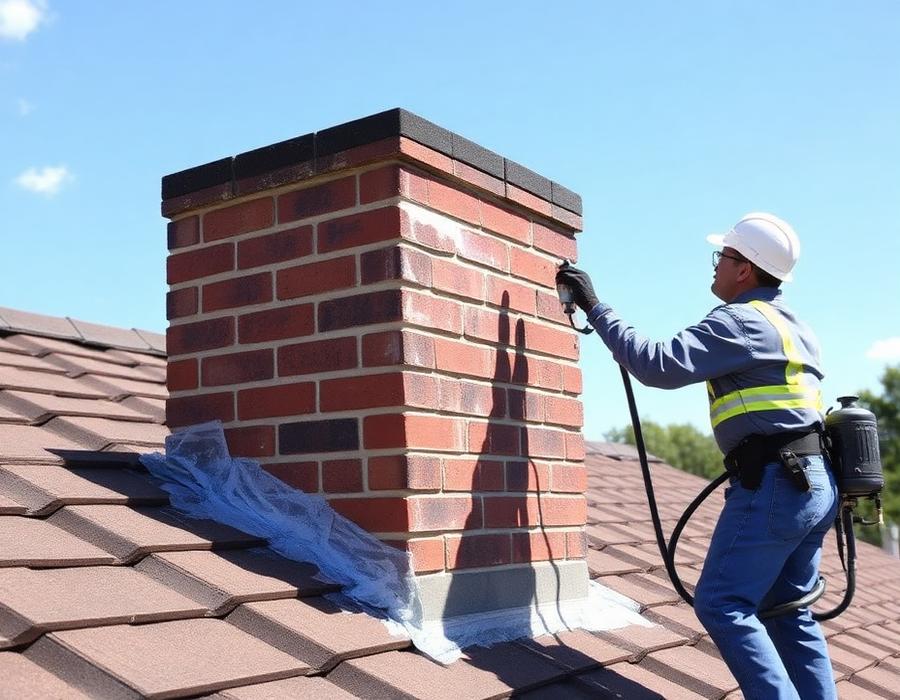
Brick and mortar are porous by design. A chimney is the most weather-exposed masonry on your house — hit from every side, with no roof over most of it — and it absorbs water on every rainy day of the year. That absorbed water is the root cause of spalled brick, dissolved mortar joints, rusted dampers, efflorescence, and interior stains. Peters Chimney Masters applies professional-grade, vapor-permeable water repellents that stop absorption while letting the masonry continue to breathe.
It is one of the least expensive things you can do for a chimney, and one of the highest-return.
Why the type of sealer matters enormously
This is the single most important thing to understand about waterproofing masonry: never use a film-forming sealer. Products that create a surface membrane — many acrylics, silicone coatings, and the paint-like sealers widely sold at hardware stores — block liquid water from entering but also block water vapor from leaving.
Masonry always contains some moisture, from rain that entered before the coating, from condensation, and from vapor rising through the structure. When that moisture cannot escape, it accumulates behind the film. Then it freezes, or it heats and expands, and it lifts the brick face right off. Homeowners who seal their chimney with the wrong product routinely cause more spalling in three years than the previous thirty produced.
The correct product is a vapor-permeable siloxane or silane-siloxane water repellent. It penetrates into the masonry and lines the pore structure so liquid water beads and runs off, while water vapor still passes through freely. It does not change the appearance of the brick, and quality formulations carry warranties measured in years, not months.
What waterproofing prevents
Spalling is the headline. When a saturated brick undergoes thermal cycling, moisture inside expands and pops the fired face off. Once that face is gone the porous interior erodes rapidly, and the only fix is replacing the unit.
Mortar deterioration follows the same pattern. Water dissolves lime out of the mortar and carries it to the surface, where it deposits as white efflorescence. Every one of those white stains represents mortar that has left the joint permanently.
Inside, absorbed water rusts the damper and smoke chamber steel, degrades flue tile mortar joints, and creates the persistent damp smell homeowners notice most in humid weather. Repelling water at the surface addresses all of it upstream.
Our application process
Waterproofing is a finishing step, not a fix. Applying repellent over cracked mortar joints, a failed crown, or spalled brick seals problems in rather than solving them, so we inspect first and complete any needed repointing, brick replacement, or crown work before application.
The masonry is then cleaned so the repellent can penetrate rather than sitting on surface grime, and it must be dry — we schedule around weather for this reason. Application is by low-pressure flood coat, working from the bottom up so the surface stays wet through the run and the product is absorbed to full depth. Adjacent roofing, windows, and landscaping are masked and protected.
Coverage rates are followed rather than eyeballed; under-application is the most common reason a repellent underperforms. We treat the full exposed stack including the crown edges, and we let you know exactly how long to keep water off the fresh surface.
A small investment that protects a large one
We waterproof chimneys throughout your local area and the surrounding communities we serve. The regional weather pattern here — months of dry heat that opens micro-cracks, then heavy concentrated winter rain — is almost purpose-built to drive water into masonry.
Most waterproofing jobs are completed in a few hours, and quality treatments typically last several years before reapplication is worthwhile. We will tell you when your chimney is due rather than selling it on a schedule.
Waterproofing pairs naturally with crown repair, cap installation, and tuckpointing, and we will happily quote them as one project so the whole water path is closed at the same time.
Warning signs to watch for
Dark, slow-drying masonry after rain
Brick that stays wet for days is absorbing heavily and needs treatment.
White efflorescence
Chalky surface deposits prove water is moving through the masonry and taking mortar with it.
Early-stage brick flaking
Small surface flakes are the warning stage before full spalling; treat now, replace later.
You just had masonry repaired
Waterproofing after repointing or a rebuild is the best way to protect the work you paid for.
Get your free chimney waterproofing estimate today
Free written estimates, same-day service windows, and licensed technicians seven days a week. Call now and speak with someone who actually works on chimneys.
Call (866) 752-4313