
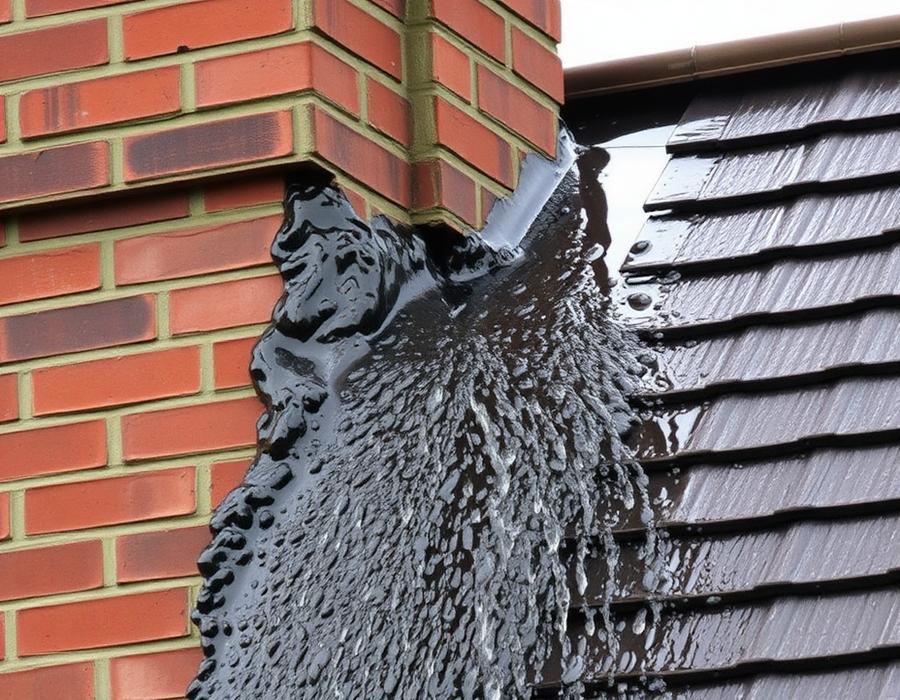
A leaking chimney rarely leaks where the stain appears. Water enters at the top or at the roofline, travels through masonry or along framing, and surfaces somewhere else entirely — a bedroom ceiling, the top of a wall, or as a damp smell with no visible source. Peters Chimney Masters finds the actual entry point instead of guessing, repairs it, and then waterproofs the structure so it does not come back next winter.
Chimney leaks are one of the most commonly misdiagnosed problems in home repair, and they are one of our specialties.
The five places chimneys leak
First: straight down an uncapped flue. If there is no cap, every storm delivers rain directly onto the smoke shelf and damper. This one is obvious once you look, and it is the cheapest to fix.
Second: a cracked or failed crown. Water enters the top of the masonry and travels down through the chimney core, often emerging well below where it entered.
Third: flashing. The intersection between chimney and roof is the single most common leak point in the entire system. Correct flashing is a two-part assembly — step flashing woven into the roof courses and counterflashing set into a cut mortar joint. When someone substitutes a bead of roofing caulk against the brick face, it fails within a few years, every time.
Fourth: the brick itself. Masonry is porous. A chimney that has lost its mortar joints or has spalled faces absorbs water like a sponge, and driving rain pushes it right through the wall.
Fifth: condensation. Especially with gas appliances vented into an oversized masonry flue, combustion moisture condenses on cool flue walls and soaks into the masonry from the inside. This one gets misdiagnosed as a roof leak constantly.
How we diagnose the real source
Diagnosis starts on the roof with a close inspection of the cap, crown, flue top, flashing, and the roof plane above and around the chimney. We photograph everything. Then we inspect the interior — firebox, smoke chamber, damper, and the wall or ceiling where the symptom appears — looking at staining patterns, which tell you a great deal about the direction water traveled.
When the source is not conclusive, we run a controlled water test: applying water to isolated areas in sequence, starting low and working up, while monitoring the interior. It is methodical, it takes time, and it produces certainty instead of a plausible theory.
Only then do we quote. You get photos of the actual failure, an explanation of the path the water is taking, and a repair scope that addresses that path rather than a package of everything we could conceivably sell you.
Permanent repairs, not seasonal patches
Flashing repair means installing proper step and counterflashing with the counterflashing let into a cut mortar joint and sealed — not caulk on brick. Crown repair means resurfacing or replacing with a real overhang and drip edge. Cap installation means a stainless cap correctly sized to the flue and crown.
For porous masonry we apply a vapor-permeable siloxane water repellent. This is an important distinction: a permeable repellent stops liquid water from entering while letting existing moisture vapor escape. Film-forming sealers — including many products sold at hardware stores — trap moisture inside the masonry, and that trapped water causes freeze damage and spalling far worse than the original problem.
Where interior damage has already occurred, we identify it clearly in the report so you can coordinate drywall, paint, or framing repair with confidence that the water source is genuinely resolved.
Fast response when water is actively entering
We handle leak calls across your local area and the surrounding communities we serve and keep same-day slots available every day of the week — active leaks do not wait politely for the next opening.
The wet season here concentrates a year of rainfall into a few months, which means a chimney that seemed fine in October can be soaking a wall by January. If you see a new stain, call while the weather is still fresh in the evidence.
Leak diagnosis and repair estimates are free and written, and all repair work is covered by our workmanship guarantee.
Warning signs to watch for
Ceiling or wall stains near the chimney
Brown rings or bubbling paint around the chase are classic chimney leak symptoms.
Damp or musty firebox
Moisture in the firebox after rain means water is entering from above.
Rusted damper or firebox hardware
Steel does not rust in a dry chimney; rust is proof of recurring water.
White efflorescence on the brick
Chalky deposits show that water is moving through the masonry and evaporating out.
Get your free chimney leak repair estimate today
Free written estimates, same-day service windows, and licensed technicians seven days a week. Call now and speak with someone who actually works on chimneys.
Call (866) 752-4313