
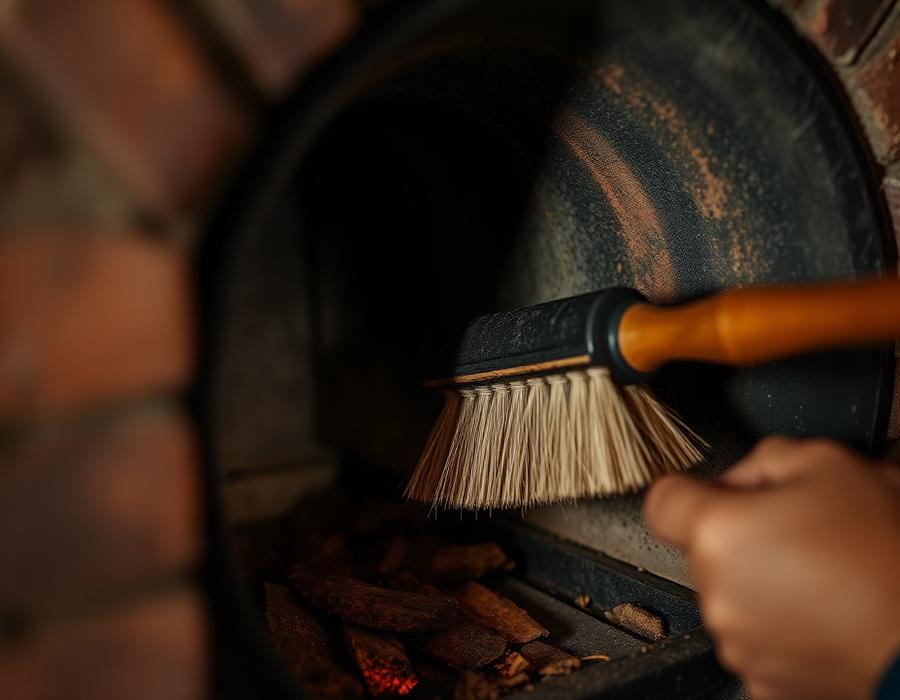
A chimney sweep is the single most effective thing a homeowner can do to prevent a flue fire. Every time wood burns, unburned particles condense on the inside of the flue as creosote — a tar-like residue that ignites at temperatures a normal fire reaches easily. Peters Chimney Masters removes that buildup completely, verifies that the flue is drafting the way it should, and leaves your living room exactly as clean as we found it.
Our sweeps are not a quick brush-and-go. We inspect before we clean, clean with dust-controlled equipment, then inspect again and hand you photographic proof of the result. If the chimney does not actually need a sweep, we will tell you that too — and you will only pay for the inspection.
Why creosote buildup is the risk you cannot see
Creosote forms in three stages. Stage one is a light, flaky soot that a brush removes easily. Stage two is a hardened, shiny flake that requires rotary tooling. Stage three is glazed creosote — a dense, tar-like coating that behaves almost like liquid fuel when it reaches ignition temperature. A chimney fire in a stage-three flue can exceed 2,000°F, which is enough to crack clay flue tiles, buckle steel liners, and transfer heat directly into the wood framing of your home.
The dangerous part is that creosote accumulates entirely out of sight. A flue can look perfectly normal from the firebox and still be lined with a quarter inch of glazed fuel twenty feet up. That is why the accepted safety standard is an annual inspection regardless of how much you burn, and a cleaning whenever deposits reach roughly one eighth of an inch.
Burning habits accelerate the process. Unseasoned or wet firewood, smoldering overnight fires, restricted air supply, and oversized fireplaces all deposit creosote faster. If you burn softwood, expect to need cleaning more often than a neighbor who burns seasoned oak.
What a Peters Chimney Masters sweep includes
We begin by protecting the work area with drop cloths across the hearth and floor, then seal the fireplace opening and connect a HEPA-filtered negative-air vacuum. That vacuum runs for the entire service, so soot travels into the filter rather than onto your furniture and drapes.
The technician then sweeps the full length of the flue with rotary brushes and rods sized to your specific flue dimensions, working from the firebox up or the roof down depending on the chimney configuration. We clean the smoke shelf and smoke chamber, which is where the heaviest deposits typically collect and where many budget services never reach. The damper is cleaned and cycled, the firebox is vacuumed, and the ash dump is cleared if your chimney has one.
Afterward, we run a visual and camera inspection of the flue interior, the crown, the cap, and the flashing. You receive photos of before-and-after conditions plus a written summary listing anything that needs attention, ranked by urgency. Nothing gets recommended without an image to back it up.
How often your chimney should be swept
Homeowners who burn wood several nights a week through a full winter generally need an annual sweep. Occasional burners — a handful of fires a season — often go two seasons between cleanings, but still need an annual inspection because deterioration, animal nesting, and water damage happen whether you burn or not.
Gas fireplaces are frequently assumed to be maintenance-free, and that assumption causes problems. Gas appliances produce moisture and mild acids that corrode flue liners, and gas flues are a favorite nesting spot for birds because they stay warm. An annual inspection catches blockages and corrosion long before they push carbon monoxide back into the house.
Pellet stoves and wood inserts have their own schedules, typically tied to tons burned rather than months elapsed. We will give you a realistic interval based on the appliance you actually have and how you actually use it.
Local service you can schedule today
We sweep chimneys throughout your local area and the surrounding communities we serve. Homes in this region face a specific combination of challenges: long dry seasons that dry out mortar joints, followed by concentrated winter rains that push water into every crack, plus significant wildfire-season ash and debris that settles into caps and crowns.
That is why our sweeps always include an exterior evaluation. It is common for us to arrive for a routine cleaning and discover a cracked crown or a cap that blew off in a wind event — small problems that are inexpensive now and expensive after a rainy season.
Same-day appointments are available seven days a week, and cleaning quotes are always given up front so you know the price before we start.
Warning signs to watch for
Smoke rolling into the room
Restricted draft is usually creosote buildup, a blockage, or a damper problem.
Strong campfire odor
A sharp smell in warm, humid weather means heavy deposits are absorbing moisture.
Black, oily flakes
Visible tar-like deposits on the damper or firebox walls indicate stage two or three creosote.
Fires that will not stay lit
Poor combustion often signals a partially blocked flue or an animal nest above the smoke chamber.
Get your free chimney cleaning & sweeping estimate today
Free written estimates, same-day service windows, and licensed technicians seven days a week. Call now and speak with someone who actually works on chimneys.
Call (866) 752-4313